Army: The Military Grunge Font for Bold Visual Impact
There's a specific kind of visual statement that requires more than just bold letters. It demands a sense of history, texture, and raw energy. This is where the Army typeface steps in. It’s not just a collection of characters; it’s a design asset built to convey strength, resilience, and a rugged, authentic aesthetic. With its distressed texture and military-inspired forms, Army delivers a powerful vibe that’s instantly recognizable, making it a go-to choice for projects that need to stand out with grit and purpose.
Defining the Rugged Character of Army
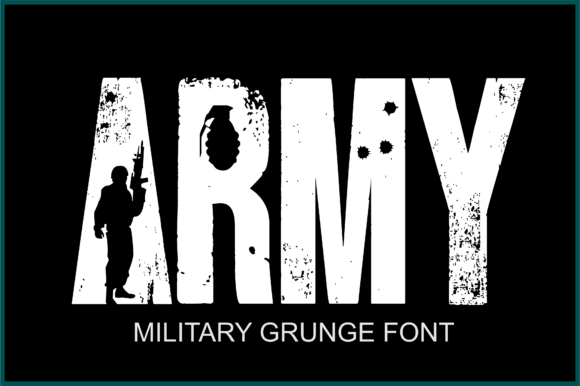
At its core, Army is a display font designed for impact. Its visual personality is shaped by a few key characteristics. The letterforms have a sturdy, blocky structure reminiscent of stencil fonts used in military applications, but with a modern typographic sensibility. What truly sets it apart is the distressed texture—a carefully crafted worn-out effect that gives each character a sense of age and authenticity. This isn't a clean, digital typeface; it has a handcrafted, weathered soul. The mix of uppercase and lowercase letters adds versatility, allowing for more dynamic and readable layouts than a purely uppercase stencil set might permit. The overall style falls into the realm of modern typography with a strong grunge influence, making it a unique creative font that bridges the gap between military heritage and contemporary design.
This font’s appeal lies in its ability to communicate a specific mood without saying a word. It speaks of endurance, outdoor adventures, tactical precision, and a no-nonsense attitude. For a designer, it’s a tool to instantly inject a project with character and a sense of narrative.
Where Army Truly Shines: Practical Applications
Knowing a font's personality is one thing; understanding where to deploy it is where the real value lies. Army excels in contexts where you want to capture attention and communicate a strong, thematic message. Its utility spans a wide range of projects, making it a versatile addition to any designer's toolkit.
- Logo Design & Brand Identity: This is a natural home for Army. It’s perfect for brands in the outdoor gear, fitness, automotive, craft brewing, or security sectors. A logo set in this typeface immediately establishes a brand identity built on strength and reliability. Think of a rugged apparel line or a local mechanic's shop—the font aligns perfectly with their core values.
- Apparel & Merchandise: The distressed texture translates exceptionally well to screen printing and embroidery. For t-shirts, hats, and jackets, Army creates designs that look lived-in and authentic from day one. It’s a staple for creating impactful graphics that people want to wear.
- Posters, Editorial & Packaging Design: In editorial design, this font can command a magazine cover or a chapter heading. For posters—whether for a music festival, a movie, or a community event—it grabs the eye. In packaging design, it can add a rugged, artisanal feel to products like hot sauces, jerky, or specialty tools.
- Digital & Social Media Graphics: On the web, Army makes a powerful statement in hero sections, banners, and as a headline font for blogs focusing on adventure or DIY projects. For social media graphics, it helps posts stand out in a crowded feed, especially for announcements, sales, or motivational content.
- Personal & Hobbyist Projects: Beyond commercial use, this premium font is fantastic for personal creative work. Think custom decals for vehicles, stencils for home decor, labels for homemade goods, or graphics for a personal blog with a gritty theme.
Making Smart Design Choices with a Display Typeface
Choosing a font like Army is just the first step. Using it effectively requires a strategic approach to ensure it enhances your project rather than overwhelms it. Here’s how to think about integrating this powerful typeface.
First, consider readability. As a display font, Army is engineered for headlines and short bursts of text, not for body copy. Its distressed details, while adding character, can reduce legibility at small sizes or in long paragraphs. The smart move is to pair it with a highly readable sans serif font or a clean serif font for supporting text. This contrast creates a clear visual hierarchy, where Army commands attention for key messages, and the secondary font delivers the detailed information comfortably.
Next, evaluate the project fit. Does the rugged, military aesthetic align with the brand's or project's core message? It’s a perfect match for a tactical gear company but might feel dissonant for a luxury spa or a children's educational brand. Always consider the audience's expectations and the emotions you want to evoke. Testing is crucial—mock up your design with the font to see how it feels in context before finalizing.
Also, review what’s included. A comprehensive commercial font like Army typically comes with more than just the basic letters. Check for a full set of numbers, punctuation, and symbols. The availability of multiple formats—such as OTF, SVG, PNG, EPS, and DXF—is a significant practical advantage. This means you can use it seamlessly in vector-based software like Adobe Illustrator for logo design, in raster programs for social media graphics, and even with cutting machines for crafting projects. This versatility makes it a valuable asset in your design assets library.
Finally, understand the licensing. Most premium fonts require a license for commercial use. Ensure you have the correct license for your intended application, whether it's for a client's logo, merchandise for sale, or a website. This protects both you and the font creator, and it’s a hallmark of professional practice.
In the end, Army