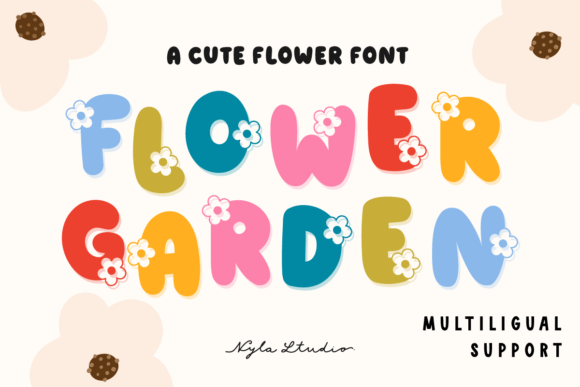
Flower Garden: A Playful Font for Creative Spring Designs
When a design calls for a touch of whimsy, nature, or seasonal cheer, the choice of typography can make or break the visual message. A stiff, corporate typeface won’t capture the essence of a spring picnic or a child’s birthday party. This is where a premium font like Flower Garden steps in. It’s a display font with a distinct personality—playful, decorative, and infused with the delicate forms of tiny flowers. It’s not just a set of letters; it’s a design asset that carries a specific mood.
Understanding the Visual Character of Flower Garden
At its core, Flower Garden is a handwritten font that leans into a decorative, illustrative style. The letterforms are characterized by small floral embellishments, often integrated into the terminals, bowls, and strokes of the characters. Think of the dot on an 'i' replaced by a simple blossom, or the swash of a 'g' adorned with a leaf. The overall effect is charming and organic, avoiding the over-complication that can make some decorative fonts illegible.
The font’s personality is undeniably cheerful and approachable. It evokes feelings of warmth, growth, and celebration, making it a natural fit for projects tied to spring, summer, Easter, garden parties, and feminine branding. Its style is more illustrative than purely typographic, positioning it as a creative font that acts as a central graphic element rather than just a vessel for text. For designers, this means Flower Garden often works best in headlines, logos, and short bursts of text where its detailed character can be appreciated without sacrificing readability.
Where Flower Garden Truly Blossoms: Practical Applications
The real value of a typeface is measured by its utility across different projects. Flower Garden’s versatile charm allows it to shine in a variety of contexts, from commercial branding to personal crafts.
Branding and Marketing Materials
For small businesses in the floral, wedding, artisanal food, or children’s product spaces, Flower Garden can become a cornerstone of a brand identity. Its use in a logo design immediately communicates a friendly, handcrafted aesthetic. It’s equally effective on business cards, thank-you notes, and promotional flyers. When used in packaging design, such as on labels for homemade jams, candles, or bath products, it reinforces a natural, boutique feel. In social media graphics, it can grab attention for event announcements, seasonal sales, or inspirational quotes, adding a layer of personality that generic fonts lack.
Publishing and Editorial Design
In the realm of editorial design, Flower Garden is a specialist. It’s an excellent choice for chapter headings in lifestyle magazines, cookbook titles, or the cover of a gardening journal. Its playful nature makes it ideal for children’s book titles or activity pages. However, a seasoned designer knows its limits. Setting body copy in Flower Garden would be a mistake; its decorative details would create visual noise and hinder long-form reading. The principle of visual hierarchy is key here: use Flower Garden to draw the eye to key information, and pair it with a clean sans serif font or a classic serif font for the supporting text.
Personal and Commercial Projects
Crafters and hobbyists will find endless uses for this font. It’s perfect for creating custom greeting cards, party invitations, and gift tags. For entrepreneurs, it’s a valuable asset for designing merchandise like t-shirts, tote bags, and mugs with catchy, floral-themed phrases. When used on a website, it can add personality to a header or a call-to-action button, though careful testing is needed to ensure it renders well across different screen sizes. The key is using it as an accent—a design element that enhances, rather than dominates, the overall composition.
Integrating Flower Garden: A Designer’s Practical Guide
Adopting a new font into your toolkit requires more than just liking its look. A professional approach involves evaluating its fit, testing its functionality, and understanding its technical specifications.
Evaluate the Project Fit. Before choosing Flower Garden, ask: Does this project’s tone align with a playful, decorative style? A law firm’s annual report would be a poor match, while a bakery’s menu is a perfect one. The font should feel like a natural extension of the project’s core message.
Master Font Pairing. The most successful designs using Flower Garden will pair it thoughtfully. As a display font, it needs a stable partner. A simple, geometric sans serif font like Montserrat or Lato provides a clean, modern contrast that lets the floral details of Flower Garden pop. Alternatively, a traditional, readable serif font like Garamond or Georgia can create a more elegant, timeless pairing. Avoid pairing it with other highly decorative or script fonts, as this will lead to visual clutter and competition.
Conduct Readability Testing. Always test the font at the size it will be used. What looks charming in a large headline might become an illegible blob at 12 points. Check the kerning (space between letters) and ensure the floral elements don’t cause awkward collisions between characters. This step is crucial for both print and web design applications.
Review the Font Package. A quality commercial font like Flower Garden should come with a clear license. Ensure it covers your intended use—whether for a client’s logo, a print-on-demand product, or a digital download. Check what styles are included. Does it have bold, italic, or alternate character versions? These variations can provide valuable flexibility within a single design system.
Ultimately, Flower Garden is more than just a creative font; it’s a tool for injecting joy and personality into visual communication. When used with intention and paired wisely, it can elevate a design from ordinary to memorable, perfectly capturing the essence of spring, celebration, and the beauty of nature in every letterform. For designers, marketers, and creators looking for a typeface with a distinct and cheerful voice, it’s a valuable addition to the typographic toolkit.