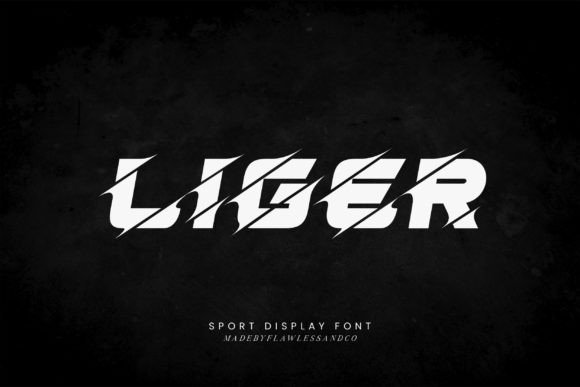
Unleashing the Liger: A Display Font with Power
In the crowded landscape of modern typography, finding a typeface that manages to be both commanding and legible is a rare feat. Many designers fall into the trap of choosing premium font families that look incredible in isolation but crumble when applied to real-world constraints like low-resolution screens or busy backgrounds. This is where Liger enters the conversation. It is not just another set of characters; it is a dynamic and captivating sports display font designed to make a bold statement. Inspired by the sheer power and agility of the legendary creature it’s named after, Liger brings a perfect blend of strength and style to your creative projects. Whether you are a seasoned brand strategist or a small business owner looking to revamp your visual identity, understanding how to harness this energy is key to standing out.
The Anatomy of a Legend: Understanding the Liger Aesthetic
When we talk about the visual characteristics of Liger, we are looking at a typeface that refuses to whisper. It demands attention. The design features heavy, sturdy letterforms that suggest stability and confidence. Unlike some serif font options that can feel dated or overly academic, or standard sans serif font choices that might blend into the background, Liger occupies a specific niche: the high-impact display category. The strokes are often thick and uniform, creating a sense of solidity, yet the curves and terminals possess a subtle fluidity. This balance prevents the font from feeling rigid or mechanical.
The personality of Liger is undeniably athletic, but it avoids the clichés of generic "jock" typography. It carries a modern edge that feels at home in contemporary design. You will notice that the character spacing is intentional; it is built for headlines, logos, and short bursts of text where every letter counts. For graphic designers and content creators, this means Liger works best when it is given room to breathe. It thrives on larger scales, where the viewer can appreciate the geometry of the letters and the negative space between them. It is a creative font that bridges the gap between rugged functionality and refined aesthetics.
Strategic Applications: Where to Deploy Liger for Maximum Impact
Choosing the right typeface is less about personal preference and more about context. For entrepreneurs and marketers, the goal is to match the font’s voice with the brand’s mission. Liger excels in environments where energy and reliability need to be communicated instantly. Consider logo design for a fitness studio, an outdoor adventure company, or a streetwear brand. In these instances, Liger provides the necessary visual weight to anchor the brand identity. It tells the audience immediately that the brand is strong, active, and trustworthy.
Beyond logos, this display font is incredibly effective in packaging design. Imagine a row of products on a shelf; the ones that win are usually those with clear hierarchy. Liger can serve as the primary headline on a coffee bag, a protein bar wrapper, or a craft beer label, ensuring the product name is readable from a distance. For publishers and bloggers, while it might be too heavy for long-form body copy, it is an excellent choice for magazine covers, chapter headings, or web design hero sections. It grabs the user’s attention the moment they land on the page, reducing bounce rates by promising engaging content.
Social media managers will also find a friend in Liger. The digital space moves fast, and social media graphics need to be digestible in milliseconds. Using Liger for Instagram stories, YouTube thumbnails, or Twitter headers ensures that your message cuts through the noise. It provides a consistent visual thread that helps build brand recognition across different platforms. Whether you are a crafter selling on Etsy or a marketing director for a large corporation, the adaptability of this font allows it to fit into diverse brand identity systems without losing its core character.
Mastering the Pairing: Practical Tips for Typography Harmony
A common mistake in editorial design and branding is using a display font for everything. While Liger is a powerhouse, it needs a supporting cast to function effectively in a design system. This is where font pairing becomes a critical skill. Because Liger has such a strong voice, you generally want to pair it with something more neutral and quiet for body text. A clean sans serif font with a taller x-height and lighter weight often works best. This contrast allows Liger to dominate the headlines while the secondary font handles the heavy lifting of paragraphs and descriptions without causing visual fatigue.
When evaluating project fit, consider the "tone" of your content. If your project requires a sense of elegance or whimsy, such as a wedding invitation or a luxury fashion lookbook, a heavy sports font might feel out of place. In those scenarios, a script font or a delicate handwritten font would be more appropriate. However, if your goal is to convey modernity, action, and confidence, Liger is likely the right tool. Always test your design assets in context. Mock up your website headers, your business cards, and your merchandise before committing. Check the readability of the font at the sizes you intend to use it. While it is designed for impact, ensure that distinct letters (like I, l, and 1) are easily distinguishable.
Licensing and Longevity: Investing in Your Design Assets
For professionals, the technical side of typography is just as important as the aesthetic. When you find a creative font that works, you need to ensure you have the rights to use it in your specific context. Most commercial font foundries offer different licenses. If you are a freelancer creating a logo for a client, you typically need a license that covers the end product, or you need to advise your client to purchase the font for their own use. If you are a publisher creating a digital magazine, you need a license that covers web embedding.
Investing in a premium font like Liger often comes with benefits beyond just the glyphs themselves. You might get access to different stylistic sets, ligatures, or language support that free fonts lack. It also signals professionalism. Using high-quality typography shows that you value craftsmanship, which subconsciously raises the perceived value of your own product or service. By integrating Liger into your toolkit, you are not just buying a file; you are investing in a versatile asset that can elevate your visual communication across print, digital, and merchandise for years to come.