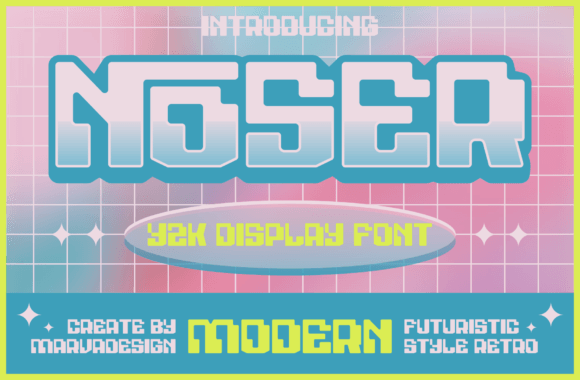
Noser: The Y2K Display Font for Modern Edge
There’s a certain boldness to Y2K design that’s making a serious comeback. It’s not just about metallics and futuristic curves; it’s about an attitude. Enter Noser, a modern Y2K display font that captures that energy perfectly. It’s a typeface that doesn’t whisper—it announces. With its sleek, condensed letterforms and a confident, almost tech-inspired personality, Noser is built for projects that need to stand out. Think of it as your design’s power suit, blending a touch of early-2000s nostalgia with the clean sophistication of contemporary typography. It’s a premium font that feels both familiar and refreshingly new.
Where Noser Makes Its Mark
This isn’t a font for body text or lengthy reports. Noser is a specialist, a creative font designed to command attention in short, impactful bursts. Its strength lies in headlines, logos, and branding elements where clarity and style are paramount. Imagine it on the cover of a fashion magazine, setting the tone for a trend-focused editorial design. Picture it as the logotype for a new streetwear brand or a cutting-edge tech startup. The font’s inherent boldness translates beautifully to packaging design, especially for products targeting a younger, style-conscious demographic—from cosmetics to craft beverages.
In the digital realm, Noser truly shines. It’s an exceptional choice for web design hero sections, creating an immediate visual anchor. For social media graphics, it’s a game-changer. A bold quote, a promotional sale announcement, or a channel name set in Noser will stop the scroll. Its high-contrast lines ensure legibility even at smaller sizes on a busy Instagram feed or a Pinterest pin. For entrepreneurs and small business owners building a brand identity, Noser offers a distinct voice. It says you’re modern, confident, and not afraid to embrace a strong aesthetic. Use it consistently across your website headers, email subject lines, and presentation title slides to build instant recognition.
Shaping Perception and Hierarchy
A font does more than display words; it shapes how those words are felt. Using Noser immediately establishes a strong visual hierarchy. Its prominent presence naturally draws the eye, making it the perfect tool for defining titles and subheads. This isn’t just about aesthetics—it’s about function. By using a high-impact display font like Noser for key elements, you create a clear roadmap for your audience, guiding them through your content with visual cues. This improves overall readability and engagement, as readers instantly know where to focus.
The personality of Noser influences brand perception directly. Its modern, slightly futuristic vibe can position a brand as innovative and forward-thinking. Yet, the Y2K undertone adds a layer of playful nostalgia, preventing it from feeling cold or sterile. This balance is powerful. It allows a brand to feel both established and edgy. For content creators, this means your blog headers or YouTube thumbnails can convey a specific mood—energetic, stylish, and contemporary—before a single word of the content is consumed. It’s a tool for setting expectations and building a cohesive visual narrative.
Putting Noser to Work: A Practical Guide
Choosing the right font is a practical decision. Before committing to Noser for a project, ask yourself: Does the project’s tone align with a bold, modern aesthetic? Is the primary use case for short-form text like titles, logos, or callouts? If the answer is yes, you’re on the right track. Always test the font in context. Mock up your headline in a design tool. View it at different sizes. How does it feel next to your chosen color palette and imagery?
Font pairing is where you can elevate your design. Noser’s strong personality pairs best with more neutral companions. For body text, consider a clean, readable sans serif font or even a classic serif font to create a pleasing contrast. Avoid pairing it with another loud display font or an overly ornate script font or handwritten font, as they will compete for attention. A good pairing might be Noser for headlines and a font like Inter or Lora for paragraphs, allowing each to serve its purpose without visual conflict.
When you invest in a commercial font like Noser, you’re gaining a valuable design asset. Review the full character set and included styles. Does it offer the punctuation, numerals, and language support you need? Check the licensing terms carefully to ensure they cover your intended use, whether it’s for a personal blog or a commercial product line. For print applications, from business cards to posters, always test a physical proof. What looks sharp on screen can sometimes feel different in ink on paper. The goal is to ensure Noser enhances your project’s professionalism and impact, becoming a recognizable part of your visual toolkit.