Texture Culture: The Bold Sans Serif for a Gritty Edge
If you’ve ever stared at a blank canvas trying to find a typeface that feels substantial but not stuffy, you know the struggle. We are often drowning in a sea of ultra-polished, sterile geometric sans serifs that look great in a tech pitch deck but lack soul. Enter Texture Culture. This isn't just another font to drag into your library; it is a specific vibe. It is a cool texture sans serif font that manages to bridge the gap between raw, gritty aesthetics and clean, professional legibility. It brings that "manly style" to the table—think rugged, confident, and bold—without sacrificing the clarity required for modern communication.
For designers, marketers, and entrepreneurs, finding a typeface with this kind of personality is rare. Most display fonts are either too decorative to be useful or too plain to be interesting. Texture Culture hits that sweet spot. It carries a visual weight and a tactile quality that suggests it was built for impact. Whether you are designing a logo for a construction startup, laying out a magazine spread about outdoor adventures, or creating merchandise for a streetwear brand, this font provides the foundation you need.
The Anatomy of a Rugged Typeface
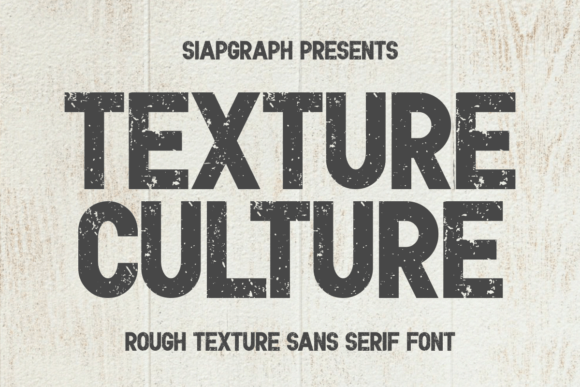
So, what exactly makes Texture Culture stand out in the crowded world of typography? It starts with the classification. While it is a sans serif font, it doesn't follow the strict, mathematical rules of Helvetica or Futura. Instead, it incorporates texture directly into the letterforms. This gives it a distressed, tactile appearance that feels organic rather than digital. It’s the kind of modern typography that looks like it has lived a life—it has history and character etched right into the curves and stems.
The "manly style" mentioned in its description translates to strong verticals and a solid stance. It doesn't waver. This makes it an incredibly effective display font. When you set a headline in Texture Culture, it commands the room. It projects confidence and stability, which are key psychological triggers for brands dealing with finance, fitness, automotive, or rugged outdoor gear. It’s a premium font that feels authentic, avoiding the artificial perfection that plagues many digital assets.
Furthermore, the texturing adds a layer of depth that flat colors often lack. In a world of flat design, a font that brings its own texture acts as a design element in itself. You don't necessarily need complex backgrounds or overlays; the typography does the heavy lifting. It’s a creative font choice that signals to your audience that you pay attention to the details.
Strategic Applications: Where Texture Culture Shines
Knowing a font looks cool is one thing; knowing how to deploy it for maximum return on investment is another. As a creative professional, you need design assets that work hard. Here is where Texture Culture proves its worth across various mediums.
Branding and Identity
Your brand identity is more than a logo; it’s a feeling. Texture Culture is exceptional for logo design where you need to convey authenticity. It works beautifully for craft breweries, artisanal coffee roasters, motorcycle shops, or boutique agencies that want to appear grounded and approachable yet professional. Because it is a commercial font, you have the freedom to use it across all your commercial touchpoints without legal headaches, provided you secure the right license.
Digital Presence and Web Design
In web design, hierarchy is everything. You need to guide the user's eye from the headline to the call to action. Texture Culture is perfect for H1 and H2 headers on websites. It grabs attention instantly. However, because of its distinct style, it’s best used for headlines rather than body copy. Pairing it with a neutral serif or a clean sans serif for paragraph text ensures readability while maintaining visual interest. It also translates incredibly well to social media graphics. In a fast-scrolling environment, the gritty, tactile nature of this font stops the thumb. It creates high-contrast visuals that pop on Instagram grids or YouTube thumbnails.
Print and Editorial Design
Don't limit this digital asset to the screen. In editorial design, Texture Culture can bring a magazine cover or a book jacket to life. It has the punch required for packaging design, especially for products that want to signal strength or natural origins. Imagine this font on a matte black box for men’s grooming products or on a rugged cardboard texture for hiking gear. It elevates the perceived value of the product before the customer even opens it.
Mastering the Pairing and Hierarchy
Using a font with this much personality requires a strategy. You can't just throw it on a page and hope for the best. The key to using Texture Culture effectively is font pairing.
Because Texture Culture has a strong voice, it needs a quieter partner. It pairs exceptionally well with:
- Clean Geometric Sans Serifs: Fonts like Montserrat or Roboto provide a clean counter-balance to the grit of Texture Culture.
- Classic Serif Fonts: For a more sophisticated, editorial look, try pairing it with a transitional serif like Baskerville or Garamond. The contrast between the old-world elegance of the serif and the modern, rugged feel of Texture Culture creates a dynamic tension.
- Subtle Handwritten or Script Fonts: If you want to lean into the artisanal vibe, a simple script font or handwritten font can work for accents, but be careful not to overdo the texture. Too much chaos makes the design unreadable.
Practical Considerations for Implementation
Before you integrate Texture Culture into your next project, there are a few practical boxes to tick. First, check the file details. A high-quality premium font usually comes with multiple weights or styles. Even though Texture Culture is defined by its texture, look for variations like bold, outline, or italic. These variations allow you to create a robust visual hierarchy without switching typefaces, which keeps your design cohesive.
Second, consider your audience and medium. If you are designing for small mobile screens, test the font at small sizes. Textured fonts can sometimes lose detail or look "fuzzy" on low-resolution displays. Ensure the "grit" of the font remains clear and doesn't turn into visual noise.
Finally, review the licensing. Since you are likely using this for commercial projects, confirm that the license covers the specific usage you have in mind, whether it's for a client's logo, merchandise, or app interface. Respecting licensing ensures you can use the asset confidently in your professional workflow.
The Final Verdict on Visual Impact
In the realm of creative assets, versatility is king, but personality is the queen that wins the audience's heart. Texture Culture is a sans serif font that refuses to be boring. It offers a solution for designers who want to inject masculinity, ruggedness, and authenticity into their work without reverting to clichéd grunge styles. It is a tool for modern storytellers—whether you are building a brand from the ground up or refreshing an existing brand identity.
If you are looking to expand your font library with something that offers both utility and flair, Texture Culture is a strong contender. It proves that typography doesn't have to be invisible to be effective; sometimes, the best designs are the ones you can almost feel. Give your next project the edge it deserves by embracing the bold, textured world of Texture Culture.