Retro Stitch: Adding Vintage Character to Modern Projects
The Personality Behind the Font
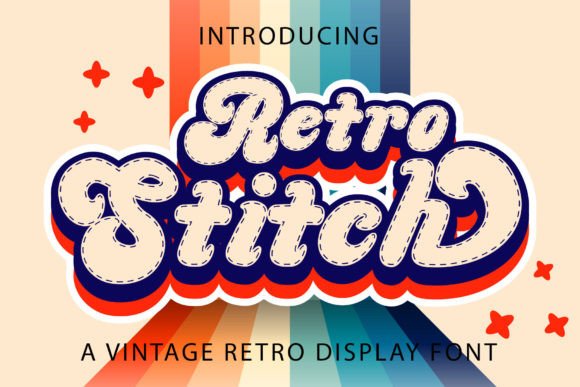
Retro Stitch carries a distinct personality that's hard to ignore. At first glance, you'll notice its thick, rounded letterforms that evoke the warmth of hand-stitched embroidery or the bold signage from mid-century diners and roadside motels. Each character feels carefully crafted with a playful, tactile quality—like thread pulled through fabric or paint brushed onto weathered wood. The letter spacing is generous, giving your text room to breathe while maintaining that cozy, nostalgic atmosphere.
What makes this display font particularly appealing is its versatility within the vintage space. It doesn't lean too heavily into one era. Instead, it blends influences from 1950s Americana, 1970s craft aesthetics, and the handmade charm of pre-digital design. The result is a typeface that feels authentic without being costume-like. It's retro, certainly, but it's also surprisingly adaptable to contemporary contexts.
The stitched texture running through each glyph adds a layer of tactile interest that flat, clean fonts simply can't replicate. This subtle detail suggests craftsmanship, care, and a human touch—qualities that resonate deeply with audiences tired of overly polished, corporate aesthetics.
Where Retro Stitch Truly Shines
Think about the projects where warmth and personality matter most. Logo design for boutique bakeries, craft breweries, independent bookshops, or artisan coffee roasters practically begs for a font like Retro Stitch. These businesses thrive on storytelling and authenticity, and this creative font communicates both before a customer reads a single word of copy.
Wedding designs represent another natural fit. Save-the-date cards, table numbers, menu boards, and thank-you notes all benefit from that handmade, intimate feeling. Retro Stitch pairs beautifully with a flowing script font for invitations, creating a visual conversation between playful and elegant that sets the tone for a celebration.
For branding projects, consider how this font might anchor a visual identity system. A small business owner launching a line of homemade candles, vintage-inspired clothing, or specialty food products could use Retro Stitch as their primary display font across packaging, social media graphics, and website headers. The consistency builds recognition while the vintage character differentiates the brand in crowded markets.
Publishers and content creators working on editorial design projects—zines, recipe books, travel journals, magazine headers—will find Retro Stitch adds visual interest without overwhelming the page. It works particularly well for chapter titles, pull quotes, and section dividers where you need to break up long stretches of body text.
Practical Considerations for Real Projects
Every font has strengths and limitations, and honest evaluation saves headaches later. Retro Stitch is a premium font designed primarily for display purposes. That means it excels at headlines, logos, and short phrases where its personality can fully register. Asking it to carry long paragraphs of body copy would be like using a trumpet for a lullaby—technically possible but missing the point entirely.
For body text, pair Retro Stitch with a clean sans serif font or a readable serif font. A geometric sans serif creates a nice contrast between vintage warmth and modern clarity. A classic serif with moderate contrast can complement the handmade quality while maintaining professionalism. Experiment with different combinations, and always test at the actual sizes you'll use. What looks balanced on a large screen might feel cramped on a mobile device or distant on a printed poster.
Readability deserves special attention with any textured or decorative typeface. At very small sizes, the stitched details in Retro Stitch might blur together. Reserve it for larger applications where those details remain crisp and intentional. On screens, check how the font renders across different devices and browsers. For print, request or create test prints before committing to a final production run.
Working With the Full Character Set
One practical advantage worth highlighting: Retro Stitch is PUA encoded, which means every glyph, swash, and alternate character is fully accessible through standard design software. You won't need special plugins or workarounds to unlock the complete set. Simply access your character map or glyphs panel, and you'll find additional stylistic options that let you customize headlines, create visual variety, and add flourishes where appropriate.
This matters for brand identity work especially. When you're building a logo or establishing typographic guidelines for a client, having access to alternate characters means you can fine-tune the look without settling for generic letterforms. Maybe a particular combination of letters feels awkward in the default style—swapping in an alternate can resolve that while maintaining the overall aesthetic.
Making Smart Decisions as a Designer or Business Owner
Before choosing Retro Stitch for any project, ask yourself a few straightforward questions. Does the project call for warmth, nostalgia, or handcrafted character? Is the target audience likely to respond positively to vintage aesthetics? Will the font appear at sizes large enough for its details to read clearly? Does the overall design concept support this particular style, or would something else serve the project better?
Licensing is another practical matter. If you're using the font for client work, merchandise, products for sale, or any commercial application, verify that your license covers those uses. Most commercial font licenses distinguish between personal and commercial projects, and some have specific terms for digital products, physical goods, or broadcast use. Reading the license agreement before purchasing prevents surprises and protects both you and your clients.
Consider building a small reference library of fonts that complement Retro Stitch. Having two or three reliable pairings ready—a handwritten font for casual accents, a sans serif for clean body copy, perhaps a simple script font for elegant touches—gives you flexibility across different projects without starting from scratch each time.
Ultimately, modern typography is about choosing the right tool for the right moment. Retro Stitch isn't trying to be everything. It does one thing exceptionally well: it brings vintage warmth and handcrafted charm to designs that need it. Used thoughtfully, it becomes one of those design assets you reach for repeatedly—not because it's trendy, but because it solves real creative problems with personality and style.