Gothic Byte: A Digital Knight for Your Design Projects
The Unexpected Harmony of Medieval Script and Pixel Art
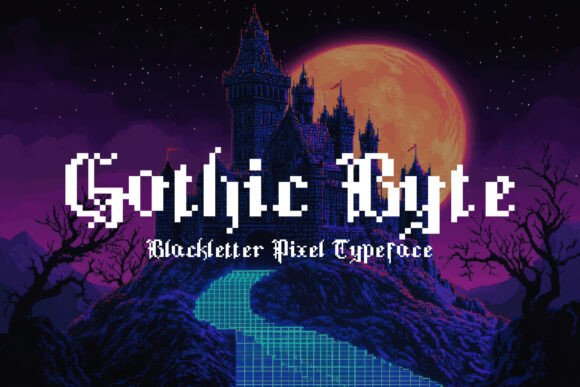
In a landscape saturated with clean sans serifs and elegant scripts, finding a typeface with genuine character can feel like a quest. Gothic Byte is a creative font that answers this call, offering a striking visual personality. It’s not just a collection of letters; it’s a statement piece, a display font that merges the intricate, angular forms of blackletter tradition with the foundational grid of 8-bit pixel art. This isn't a historical replica with a digital filter slapped on. The design is intentional, creating a premium font that feels both ancient and authentically retro, perfect for the digital age.
The visual appeal lies in this deliberate contrast. You get the sharp, authoritative angles of a medieval manuscript, but rendered with the charming, blocky constraints of early computer graphics. This gives Gothic Byte a unique personality: it’s bold, slightly nostalgic, and unapologetically bold. For designers and creators, this typeface provides an immediate narrative hook. It whispers of dungeon crawlers, epic quests, and handwritten chronicles, all while speaking the language of pixels and screens. It’s a font that doesn’t just sit on the page; it tells a story before a single word is read.
Strategic Applications: Where This Creative Font Commands Attention
Understanding a font’s strengths is key to using it effectively. Gothic Byte excels as a display font, meaning it’s crafted for impact at larger sizes—think headlines, titles, and prominent calls to action. Its intricate details would become muddled in a paragraph of body text, but when used strategically, it becomes a powerful tool for brand identity and visual hierarchy.
Consider its use in logo design for a craft brewery, a fantasy-themed game studio, or a metal band. It instantly establishes a tone of heritage, strength, and distinctiveness. In packaging design, it can make a product stand out on a shelf, suggesting artisanal quality or a story behind the brand. For digital applications, it’s a natural fit for video game title screens, UI elements for RPGs, or immersive website headers for events like Renaissance fairs or themed bars. Social media graphics for announcements or special promotions gain an authoritative, eye-catching edge. Even in editorial design, it can be used for chapter headings in a fantasy novel or for the title of a magazine feature on historical topics, adding a layer of thematic depth.
Practical Guidance for Implementation and Pairing
Choosing the right font is only half the battle; implementing it well is what separates good design from great. When evaluating if Gothic Byte fits your project, consider your audience and the message you want to convey. It’s ideal for projects targeting adults aged 20-50 with an appreciation for gaming culture, history, or bold aesthetics. If your brand voice is minimalist, ultra-modern, or highly corporate, this creative font might create a visual disconnect.
A critical step is testing font pairing. Because Gothic Byte is so distinctive, it requires a complementary partner that doesn’t compete for attention. A clean, simple sans serif font for body text is often the safest and most effective choice. Think of fonts like Open Sans, Roboto, or Lato. Their neutral forms allow the bold personality of Gothic Byte to shine in headlines without overwhelming the reader. Avoid pairing it with other ornate serif fonts, complex script fonts, or busy handwritten fonts, as this will create visual chaos and harm readability.
Always review the included styles and character sets of any premium font you purchase. Gothic Byte often includes alternates, ligatures, or extended language support that can add further customization and authenticity to your work. Test it at the intended size on the actual medium—whether a mobile screen, a printed poster, or a product label—to ensure the pixel-based details remain crisp and legible. Finally, for any commercial project, verify the commercial font licensing to ensure it covers your specific use case, whether for client work, merchandise, or digital products. This due diligence protects your investment and ensures professional, consistent use across all your design assets.